Tree Kangaroo: The Amazing Marsupial That Lives in Trees
Imagine a kangaroo that lives in trees. It sounds funny, right? But it is true! The tree kangaroo is a real animal. It is a marsupial that spends most of its life high up in the rainforest canopy .
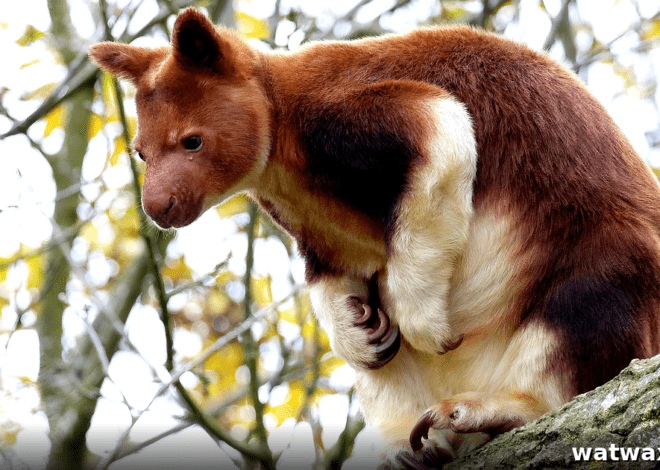
These animals are special. They are not like the big kangaroos you see hopping in the outback. Tree kangaroos are built for climbing. They have strong arms and sharp claws. They are also very good at jumping from branch to branch. They are among the largest mammals that live in trees in Australia .
There are 14 different species of tree kangaroos . Each one is a little different. Some are very rare. In fact, many are endangered. Learning about these unique marsupials is the first step in helping to protect them.
Table of Contents
What Exactly is a Tree Kangaroo?
The tree kangaroo is a type of macropod. The word “macropod” means “big foot.” Kangaroos and wallabies are also macropods. What makes this animal different is its home. It is the only true arboreal (tree-living) kangaroo .
Millions of years ago, all kangaroos lived in trees. Then, they came down to live on the ground. Later, some kangaroos went back up into the trees. The tree kangaroo is the result of this return to an arboreal lifestyle . It is a fascinating example of evolution.
The scientific name for a tree kangaroo is Dendrolagus . This name comes from Greek words. “Dendron” means tree, and “lagos” means hare. It means “tree hare” even though it is a marsupial.
These amazing creatures have adapted well to life in the treetops. They are a unique part of our world’s biodiversity. They show how animals can change to live in different environments.
14 Remarkable Species of Tree Kangaroos
There are 14 known species of tree kangaroo . They are found in different places. Two species live in Australia. The other 12 species live in Papua New Guinea and Indonesia .
Here are a few of the species you might find interesting:
- Bennett’s Tree Kangaroo: This species lives in Australia. It has a grey-brown coat and a black underside .
- Lumholtz’s Tree Kangaroo: This is the smaller of the two Australian species. It has reddish-grey fur .
- Goodfellow’s Tree Kangaroo: This species lives in central New Guinea. It has a striking coat with a golden yellow head and rump .
- Huon Tree Kangaroo (Matschie’s): This species is found in the Huon Peninsula of Papua New Guinea. It is an Endangered species .
- Golden-mantled Tree Kangaroo: This is one of the most endangered mammals in the world. It was discovered in 1990 and lives in Papua New Guinea and Indonesia .
Each species is special. They all play an important role in their rainforest ecosystem. Unfortunately, many species are facing serious threats.
Where Does a Tree Kangaroo Live?
A tree kangaroo lives in the tropical rainforests . You can find them in three main countries: Australia, Papua New Guinea, and Indonesia .
In Australia, they live in the far north of Queensland. The Wet Tropics is their home. You can find Bennett’s and Lumholtz’s tree kangaroos there .
In Papua New Guinea, many different species live in the mountains. They often live in very high, cloud forests. Some live at altitudes up to 11,000 feet . The Tenkile tree kangaroo lives in the Torricelli Mountains .
In Indonesia, they live on the western side of the island of New Guinea. The Dingiso is found there. This species is considered sacred by some local people .
Their habitats are under threat. Deforestation is destroying the rainforests they call home . They need these forests to survive.
The Unique Look and Adaptations
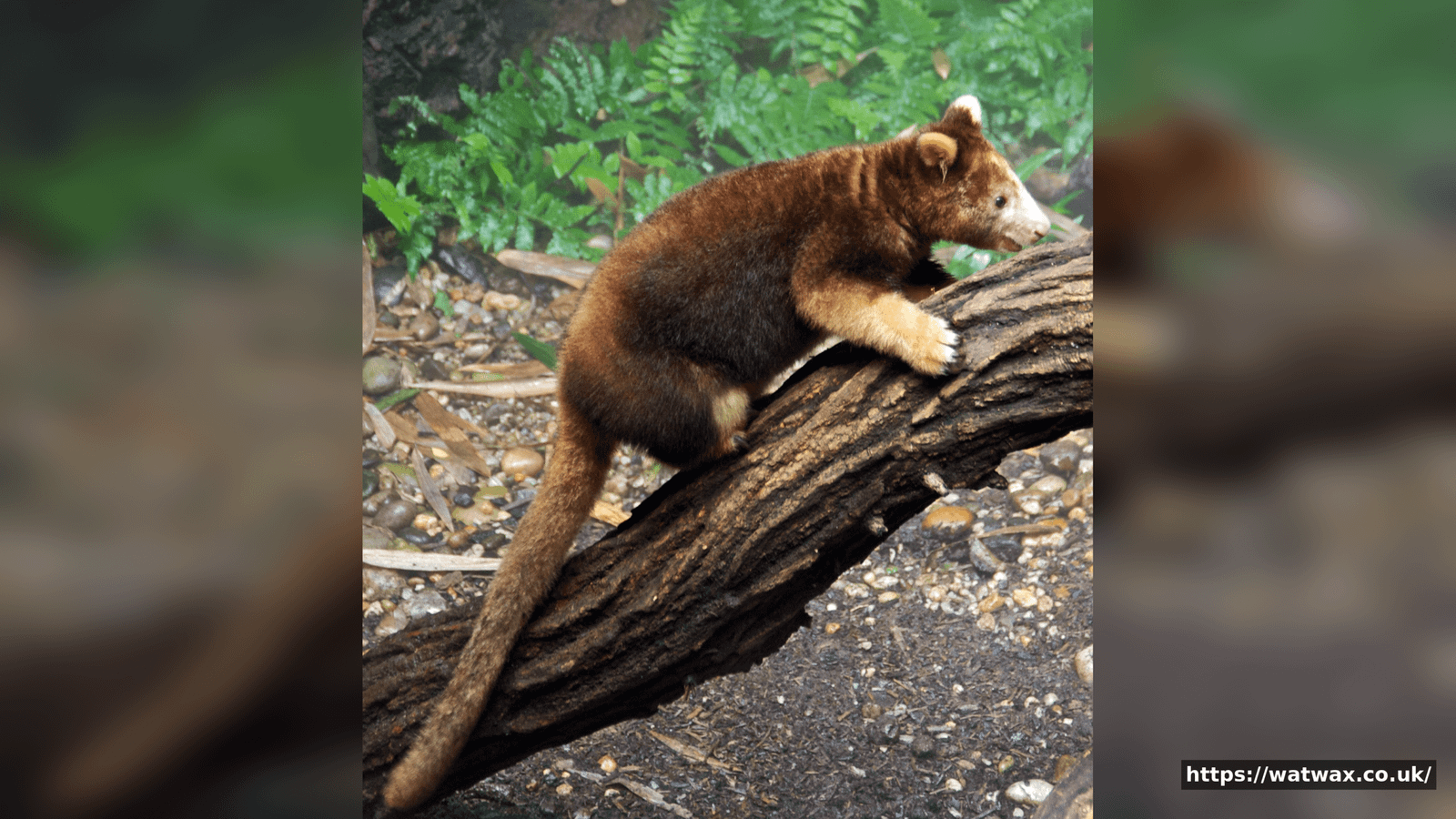
How does a tree kangaroo survive in the trees? They have special adaptations. Their bodies are different from ground kangaroos. These adaptations help them climb and live in the canopy.
- Strong Forelimbs and Claws: They have powerful arms and long, curved claws. This helps them grip tree trunks and branches .
- Shorter Hind Legs: Unlike ground kangaroos, their back legs are shorter. This makes it easier to climb but harder to hop on the ground .
- Long, Bushy Tail: Their tail is long and bushy. They use it for balance when moving through the branches. It acts like a counterweight .
- Padded Feet: Their feet have rough pads and are broad. This gives them a better grip on the bark of trees .
These amazing adaptations make them excellent climbers. They can even move their hind legs independently. This is different from ground kangaroos, which move both legs together . This helps them walk and climb.
Diet and Behavior in the Canopy
What does a tree kangaroo eat? They are mostly herbivores. This means they eat plants. Their diet consists mainly of leaves, fruits, and flowers . They sometimes eat tree bark and sap .
They spend hours foraging for food in the trees. Their stomachs are special. They have a chambered stomach that helps them break down tough leaves . This is similar to how cows digest grass.
These animals are solitary creatures. They usually live alone. They do not form large groups like some ground kangaroos . They only come together to mate. Mothers and their joeys are the main social bond.
A tree kangaroo is most active at night. Some are more active during the day. Lumholtz’s tree kangaroo is cathemeral. This means it is active both during the day and at night . It spends a lot of time resting on a branch, sleeping.
The Life of a Joey
Like all marsupials, the female tree kangaroo has a pouch. The baby is called a joey. The joey is born after a very short pregnancy. It is tiny and looks like a bean .
The newborn joey crawls into its mother’s pouch. It attaches to a teat. It will stay there for about nine months. It nurses and grows inside the pouch .
After nine months, the joey starts to come out. It will stay in the pouch for another one to two months. It will hop in and out as it gets bigger . Eventually, it will leave the pouch for good.
The joey stays with its mother for a long time. It will stay until it is about two years old. At that age, it becomes sexually mature . Female tree kangaroos have a strong bond with their offspring .
Why the Tree Kangaroo is Important
Why does a tree kangaroo matter for the rainforest? They play a key role in their ecosystem. They are important for the health of the forest .
As they move through the trees, they eat fruits and leaves. They also help with pollination and seed dispersal . When they eat fruit, they drop seeds. This helps new plants grow.
Their role in seed dispersal is vital. It is critical for the regeneration of the forest. This helps keep the rainforests healthy and resilient . Rainforests are important for the whole planet. They store carbon and help fight climate change.
The tree kangaroo is a keystone species. Protecting them helps the whole ecosystem. It protects the biodiversity of the rainforest. It also helps local communities that depend on the forest.
Threats to Their Survival
Sadly, the tree kangaroo is in danger. Their populations are going down. They face many threats. These threats are mostly caused by humans.
- Habitat Loss: This is the biggest threat. Deforestation destroys their homes. People clear the land for logging and agriculture . Rainforests are cut down for timber and palm oil plantations.
- Hunting: Tree kangaroos are hunted for their meat and fur. In some areas, this is a big problem. Hunting has driven some species close to extinction .
- Climate Change: Climate change is making things worse. Droughts and wildfires are more common . These events destroy large areas of their habitat.
The Golden-mantled tree kangaroo is a sad example. It has lost 99% of its historical range . This is why conservation efforts are so important.
Conservation Efforts to Protect Them
What is being done to protect the tree kangaroo? Many groups are working hard to help. There are several conservation programs.
In Australia, groups like the Tree Kangaroo and Mammal Group help. They work to create wildlife corridors. They also plant trees to restore habitats .
In Papua New Guinea, there are successful programs too. The Tenkile Conservation Alliance has helped the Tenkile tree kangaroo. They worked with local villages. They convinced them to stop hunting. They also provided rabbits as a food source. As a result, the Tenkile population has started to recover .
Another project is the Tree Kangaroo Conservation Program. They are protecting the Huon tree kangaroo. They are working to create a conservation area. This will be the first legally recognized conservation area in Papua New Guinea .
These efforts show that change is possible. We can help save the tree kangaroo.
Fun Facts About Tree Kangaroos
The tree kangaroo is full of surprises. Here are some fun facts about them:
- They can jump from trees to the ground. They can jump from up to 18 meters high without getting hurt !
- They are the only kangaroos that can move their back legs independently .
- They can rotate their ankles inward. This helps them climb up and down tree trunks .
- They have the largest brain-to-body ratio of any marsupial . They are very smart.
- The Dingiso tree kangaroo descends backwards from trees. It climbs down hand over hand, like a human .
How You Can Help
You can help protect the tree kangaroo. Even small actions can make a difference. You can help from anywhere in the world.
- Support Conservation Groups: You can donate to groups like the World Wildlife Fund or the Tree Kangaroo Conservation Program.
- Be a Smart Consumer: Choose products that are rainforest-safe. Avoid products with unsustainable palm oil.
- Spread Awareness: Tell your friends and family about the tree kangaroo. Sharing their story helps.
- Visit Zoos: Many zoos have tree kangaroos. Visiting them supports their conservation programs.
FAQs About the Tree Kangaroo
What is a tree kangaroo?
A tree kangaroo is a marsupial from the genus Dendrolagus. They are adapted for life in trees. They are related to kangaroos and wallabies .
Where do tree kangaroos live?
They live in the rainforests of Australia, Papua New Guinea, and Indonesia .
How many species of tree kangaroos are there?
There are 14 known species of tree kangaroos .
What do tree kangaroos eat?
They are mainly herbivores. They eat leaves, fruits, flowers, and tree bark .
Are tree kangaroos endangered?
Many species are endangered or critically endangered. They face threats from habitat loss and hunting .
How can I help protect tree kangaroos?
You can help by supporting conservation groups, buying sustainable products, and spreading awareness about these animals.
Conclusion
The tree kangaroo is one of nature’s most incredible animals. They show us how amazing evolution can be. They have adapted to live a unique life in the treetops. They are a vital part of the rainforest ecosystem.
The threats they face are real. But there is hope. Conservation efforts are working. They prove that we can make a difference. By learning and sharing their story, you help too. Let’s work together to protect these fascinating tree-dwelling marsupials for future generations.