How to Use Peroxide and Water for Ear Wax Removal Safely at Home
Have you ever felt like you were underwater even when standing in your living room? That muffled feeling usually means your ears have a bit too much wax buildup. It happens to the best of us! While ear wax is actually a good thing—it protects your ear canal from dirt and bugs—too much of it can be a real pain. Many people turn to peroxide and water for ear wax removal because it is a simple and affordable way to find relief. In this guide, we are going to talk about how you can safely clean your ears at home without any fuss. We want you to feel confident and clear-headed again.
Cleaning your ears does not have to be a scary or complicated task. Using a mixture of hydrogen peroxide and warm water is a time-tested method used by many families. It works by bubbling away the hard wax so it can slide out easily. In the next few sections, we will break down exactly what you need and how to do it step-by-step. We will also talk about when it is better to put down the dropper and call a doctor. Let’s get started on making your ears feel fresh and clear today!
Why Does Ear Wax Build Up in the First Place?
Our bodies are pretty amazing at taking care of themselves. Ear wax, which doctors call cerumen, is a natural coating that keeps your ears healthy. It acts like a sticky trap for dust and bacteria. Usually, old wax dries up and falls out of your ear on its own when you chew or talk. However, sometimes the wax gets pushed back too deep or the body makes too much. This is when you might start looking for a solution like peroxide and water for ear wax removal. Knowing why it happens helps you prevent it in the future.
Is Using Peroxide and Water for Ear Wax Removal Safe?
Many people wonder if it is okay to put peroxide in their ears. For most healthy adults, using a weak solution of peroxide and water for ear wax removal is perfectly fine. The peroxide helps to break up the tough bonds in the wax. When it touches the wax, it starts to bubble and fizz. This “fizzing” action is actually the oxygen working to loosen the gunk. As long as you do not have a hole in your eardrum or an active infection, this method is a very popular choice for home care.
Supplies You Will Need for Ear Cleaning
Before you start, gather everything so you can stay relaxed. You will need a bottle of 3% hydrogen peroxide, which you can find at any local shop. You also need some clean, lukewarm water. Do not use cold water, as it can make you feel very dizzy! Grab a small bowl to mix them, a medicine dropper, and a soft towel. Having these items ready makes the process of peroxide and water for ear wax removal much smoother. It only takes a few minutes to set up your little home “ear spa.”
How to Mix Your Ear Cleaning Solution
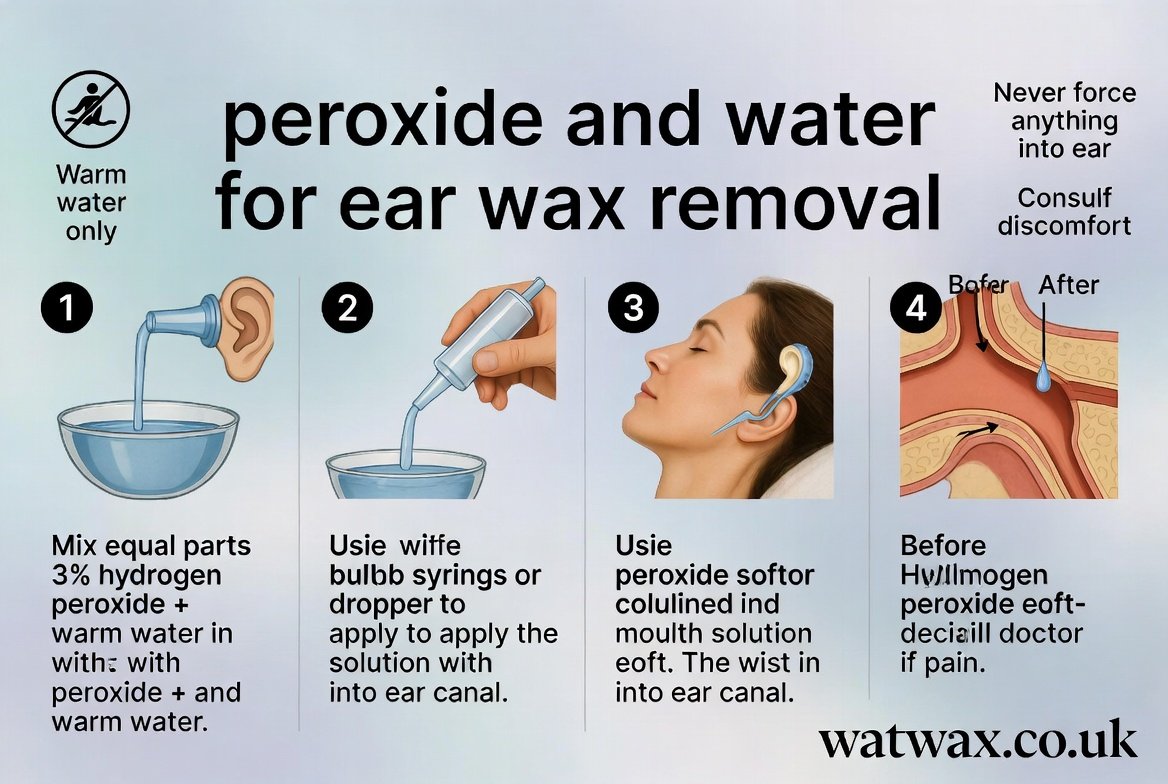
Mixing the solution is the easiest part of the whole process. You want to use equal parts of both liquids. For example, take one tablespoon of peroxide and mix it with one tablespoon of warm water. This dilution makes the peroxide gentle on your skin while still being strong enough to melt the wax. Some people use pure peroxide, but mixing it with water is much more comfortable for beginners. Once it is mixed, you are ready to use peroxide and water for ear wax removal to clear your hearing.
The Step-by-Step Way to Clear Your Ears
First, tilt your head to the side so the clogged ear faces the ceiling. Use your dropper to put a few drops of the mixture into your ear canal. You will likely hear a crackling or popping sound—don’t worry, that means it’s working! Stay in that position for about five to ten minutes. This gives the peroxide and water for ear wax removal time to really soak into the wax. Afterward, tilt your head over a towel or the sink to let the liquid and wax drain out.
What Does the Bubbling Sound Mean?
If you hear fizzing, don’t panic! It is a very normal part of using peroxide and water for ear wax removal. This sound is simply the oxygen being released as the peroxide reacts with the organic material in your ear. It is almost like the bubbles in a soda. Some people find the sound a bit loud because it is happening right next to their eardrum, but it is harmless. Once the bubbling stops, it usually means the wax has been softened enough to be washed away.
Important Warnings for Home Ear Care
Safety always comes first when dealing with your senses. You should never use peroxide and water for ear wax removal if you think you have a ruptured eardrum. If you have tubes in your ears or have had ear surgery recently, skip this and see a professional. Also, never stick cotton swabs or sharp objects into your ear to “help” the wax out. This usually just pushes the wax deeper and can cause a lot of damage. Stick to the drops and let gravity do the heavy lifting for you.
When to Visit a Professional Doctor
While home remedies are great, they aren’t for every situation. If you try peroxide and water for ear wax removal and your ear still feels blocked after a few days, it is time to see a doctor. They have special tools to safely look deep inside your ear. Also, if you feel sudden pain, see blood, or feel very dizzy, stop what you are doing immediately. Doctors can clear a “wax plug” in just a few minutes, so there is no need to suffer in silence if the home method doesn’t work.
Tips for Preventing Future Wax Clogs
Once your ears are clear, you probably want to keep them that way! One of the best tips is to stop using Q-tips inside the ear canal. They are okay for the outer part of the ear, but not the inside. You can also try putting a drop of mineral oil in your ears once a week to keep the wax soft. Keeping your ears dry after swimming or showering also helps. By being mindful, you won’t have to use peroxide and water for ear wax removal nearly as often.
Why Warm Water is Better Than Cold Water
We mentioned this earlier, but it is worth repeating! Your inner ear helps control your balance. If you put cold water in your ear, it can “shock” your balance system and make the room spin. Always make sure your mixture of peroxide and water for ear wax removal is close to your body temperature. You can test a drop on your wrist first, just like a baby bottle. If it feels comfortable on your skin, it will be comfortable in your ear. This small step makes a huge difference in your experience.
Conclusion
Taking care of your ears is a great way to improve your quality of life. When you can hear clearly, everything from watching TV to talking with friends becomes much better. Using peroxide and water for ear wax removal is a budget-friendly and effective way to handle mild buildup at home. Just remember to be patient, stay gentle, and never force anything into your ear canal. If you follow these simple steps, you will have clear ears in no time. Give it a try next time you feel a bit “stuffed up” and see how much better you feel!
FAQs
1. How many times a day can I use peroxide in my ear? It is usually best to use it only once or twice a day for a few days. If the wax doesn’t clear up by then, you should check with a doctor to make sure there isn’t a deeper issue.
2. Does the peroxide mixture hurt? It should not hurt at all. You might feel a cold or tingling sensation, and you will definitely hear some bubbling. If you feel a sharp pain, wash it out with plain water and stop.
3. Can I use this for my children? You should always ask a pediatrician before using peroxide and water for ear wax removal on kids. Their ears are smaller and more sensitive than adult ears.
4. How long do I leave the drops in? Most people find that 5 to 10 minutes is the perfect amount of time. If the wax is very hard, you might need to lean your head over for the full 10 minutes.
5. What if the wax doesn’t come out? Sometimes the wax is too stubborn for one treatment. You can try again the next day. If it still won’t budge, a healthcare professional can use a special rinse to flush it out.
6. Can I use tap water for the mixture? It is safer to use distilled water or water that has been boiled and cooled down. This ensures that the water is clean and free of any tiny germs that might irritate your ear.